

Register for Palestinian Prisoners’ Day: No Azure for Apartheid Public Town Hall
On Friday, April 17th, at 12 PM PT, No Azure for Apartheid will host a public Town Hall for Palestinian Prisoners’ Day. You can register for the event at: noaa.cc/townhall
Palestinian Prisoners’ Day comes at a time when the israeli Occupation Forces (IOF) have kidnapped over 10,000 Palestinians, are holding them in torture dungeons, and have formally legalized the death penalty for Palestinians, creating yet another way for the IOF to kill our people.
The US-israeli occupation and genocide in Palestine is maintained through a number of complicit companies. Microsoft is one of the biggest facilitators of israeli torture and genocide of Palestinians.
On this Palestinian Prisoners’ Day, No Azure for Apartheid is inviting you to a discussion on how Microsoft is complicit in the israeli Prison System’s crimes as well as the broader US-israeli occupation and genocide. We will also talk about our campaign and how everyone can take steps to fight back against digital arm manufacturers, like Microsoft, powering atrocities against Indigenous people in Palestine, Lebanon, Iran, and everywhere.
✌️ Join No Azure for Apartheid this Palestinian Prisoners’ Day for a public Town Hall
🔓 Open to all (both Microsoft workers and non-workers welcome)
✍️ Register at: noaa.cc/townhall
🗓️ Friday, April 17
⏰ 12 PM PT / 3 PM EST / 7 PM UTC / 10 PM Al-Quds, Palestine
Klimaatverandering? 👉 Systeemverandering!

Beste rebel,
Hoe is het mogelijk dat broeikasgassen nog altijd blijven toenemen en dat onze bodem en ons water nog steeds massaal worden vergiftigd door pesticiden, plastics en chemicaliën? Waarom grijpen onze politieke bestuurders niet in?
Ze zijn vooral bezig met electorale belangen en negeren de feiten. Ze zijn gericht op het verkrijgen en behouden van macht en hebben lak aan de wetenschap. Ze laten zich ompraten of omkopen door grote bedrijven. En ze zitten vast in een systeem dat zichzelf niet wil, kan of zal veranderen, omdat verandering hun macht bedreigt. Zo verwoesten ze onze toekomst.
De urgentie is ondubbelzinnig
Als we doorgaan op dit pad, koersen we af op drie graden opwarming rond 2070 en daarmee een onleefbare biosfeer voor het eind van deze eeuw. Lees deze zin nog een keer.
Het partijpolitieke systeem is onderdeel van het probleem. De oplossing moet daarom komen van een alternatief systeem dat wél volledig democratisch is en dat wél rekening houdt met de lange termijn. In Nederland valt niets te verwachten van een kabinet dat de samenhang van de verschillende crises (geopolitieke spanningen, stervende biosfeer, gezondheid, migratie, informatieverstoring), de realiteit van de polycrisis, niet erkent en de roep van de samenleving om rechtvaardigheid negeert.
Wat is er nodig?
Beleid dat recht doet aan de feiten, aan wat we eerlijk vinden, sociaal, internationaal en intergenerationeel, en aan de echte verlangens van de samenleving. Hoe we dat bereiken? Door te zorgen dat er naar de samenleving en naar de wetenschap wordt geluisterd, voorbij de politieke spelletjes. De macht terug naar de samenleving.
De weg naar een goede toekomst ziet er voor iedereen anders uit, maar de bestemming is breed gedeeld: we moeten af van een bestuur dat incompetent en onverantwoordelijk is. Mensen en feiten moeten onze toekomst bepalen, niet gecorrumpeerde politieke partijen, niet vervuilende bedrijven, niet ongeschikte bestuurders die de wetenschap naast zich neerleggen.
Dit vraagt volharding, solidariteit en handelen vanuit het besef dat de bestuurlijke, sociale en ecologische crises onlosmakelijk verbonden zijn.
Op onze website staat hoe jij mee kunt doen. Kom een keer naar een low risk actie en ontmoet gelijkgestemden. Neem anderen mee, je zult zien dat het leuk en bevredigend is. Als je naar een meer high risk actie wilt: doe eerst een actietraining! Ook die zijn leuk. Ontdek wat een regeneratieve cultuur is!
Klaar voor het voorjaarsoffensief
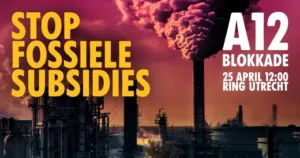
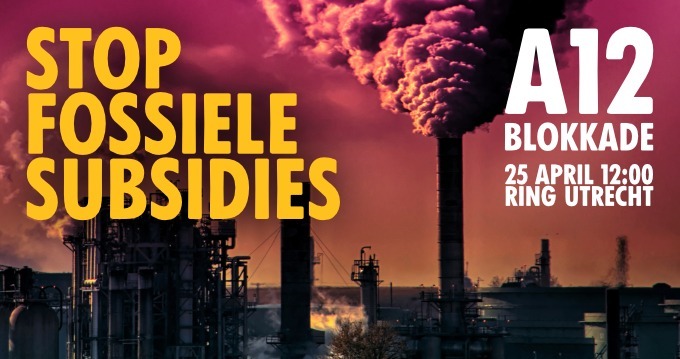
Op zaterdag 25 april blokkeren we met duizenden bezorgde burgers opnieuw de A12. Deze keer rond Utrecht. Samen met Debt for Climate eisen we een einde aan de jaarlijkse ruim 40 miljard euro fossiele subsidies. Dit geld kan veel beter gebruikt worden.
Ben je er ook bij? Volg een actietraining. Of doe mee in de support-demo aan de zijkant.
Rebellenberaad: laat je stem horen
Zondag 7 juni 2026 is in Utrecht het volgende RebellenBeraad. We laten dan met heel veel rebellen uit het hele land zien hoe we de verschillende ideeën over onze beweging laten samenvloeien en hoe we de beweging sterker maken voor de strijd tegen uitsterving.
- Je leert andere rebellen kennen,
- Je ervaart wat het is om op een goed begeleide en gestructureerde manier tot nieuwe inzichten te komen (à la burgerberaad),
- Je kunt je mening kwijt en hoort de mening van andere rebellen,
- Je geeft mede koers aan de beweging.

Versterk ons social media team!
Ben jij iemand die het leuk vindt om op social media te zitten en die wil bijdragen aan de zichtbaarheid van Extinction Rebellion online? Dan hebben we je hard nodig. We zoeken mensen:
- die scherpe teksten kunnen schrijven
- die het leuk vinden om de afstemming met campagnes te doen (zorgen dat teksten op tijd aangeleverd worden, posts inplannen, helpen met het verhaal geschikt te maken voor social media)
- die het leuk vinden bij grote acties de social media backoffice te draaien
- die het leuk vinden gewoon af en toe te posten
Omdat we een klein en hecht team zijn, rekenen we op elkaars inzet om samen iets moois neer te zetten. Mogen we ook op jou rekenen? Mail vandaag naar media@extinctionrebellion.nl met als onderwerp: “Ik ben jullie Social Media Rebel”

Nieuws van onze communities
Sluit de gifkraan!
XR Gifvrij strijdt voor een fundamenteel ander landbouwsysteem waar het water schoon is, insecten, vogels en bodemleven floreren, er geen resistente schimmels ontstaan én onze gezondheid niet wordt bedreigd.
Bij al onze acties hebben we twee doelen: mensen ter plekke en via de media bewust maken van het gifprobleem én het opvoeren van de druk op de agro-industrie om te stoppen met het huidige, perverse landbouwsysteem.
We organiseren diverse acties met lokale groepen zoals het (met krijtspray) spuiten van het sjabloon ‘Pas op! Landbouwgif’ op zo’n 50 plekken waar niet-biologisch wordt geteeld: bollenvelden, fruitboomgaarden, glyfosaatvelden, enzovoorts. Op 17 januari verstoorden we een reclamestunt van de tulpensector op het Museumplein met onze waarschuwingen voor landbouwgif op de bloemen.
Maar liefst 70% van de Nederlanders wil dat het pesticidengebruik in Nederland in 2030 met 50% is afgebouwd. Maar Den Haag doet natuurlijk niets (hooguit of misschien nóg een onderzoek).
Sluit je bij ons aan. Stuur ons een berichtje en strijd mee voor biodiversiteit, gezonde landbouw, gezonde mensen en gezonde ecosystemen!

Wetenschappers in het lab? Ja, én op de barricades!
Wat moet je, als je elke dag de bewijzen ziet dat het niet goed gaat met de Aarde? In actie komen! Voor Dick van der Wateren (78) staat dat vast. Hij is aardwetenschapper en klimaatactivist bij XR’s zusterorganisatie Scientist Rebellion (SR). Want ‘The privilege to know, is the duty to act’.
 Dick vertelt waar zijn betrokkenheid bij Scientist Rebellion vandaan komt: ‘Als wetenschappers hebben we het voorrecht dat we weten hoe Aarde en mensheid werken als één verbonden geheel. Die kennis brengt de plicht met zich mee in actie te komen. Daarom staan we bijvoorbeeld samen met XR op de A12, in onze witte laboratoriumjassen: om te laten zien dat wij als wetenschappers vinden dat de regering moet stoppen met fossiele subsidies. En afgelopen december rebelleerden we bij de Masters Expo, de vroegere Miljonairsbeurs.’
Superrijken: grootste aanjagers klimaatcrisis
Met hun verslindende en vervuilende leefstijl dragen de allerrijksten veruit het meeste bij aan de klimaatcrisis [1]. Ter illustratie: wanneer iedereen zoveel zou uitstoten als de 0,1% rijkste mensen, zou de Aarde nu 12,1 ℃ warmer zijn! [2]. Rebellen van Scientist Rebellion en Extinction Rebellion demonstreerden daarom bij de Masters Expo om te pleiten voor eerlijker belasting van de superrijken om zo geld vrij te maken voor samenleving en planeet. Onderdeel van de actie was het tegenhouden van bezoekers. Dick vertelt: ‘Ze waren in salonboten via de grachten op weg naar de beurs. Maar wij hebben ze kunnen tegenhouden, in onze elektrische bootjes. Moesten ze met hun dure jurken en hoge hakken met de bus. Ze waren heel boos. Hun boten voeren leeg verder, met nog hele kratten vol champagne.’
Betrouwbare, wetenschappelijke informatie
Het doel van Scientist Rebellion is voorlichten, politici oproepen het klimaat bovenaan de politieke agenda te zetten en journalisten oproepen mensen eerlijk en volledig te informeren over de klimaatcrisis. Goed onderbouwde, wetenschappelijke informatie is immers cruciaal. Daarom publiceert Scientist Rebellion samen met Scientists for the Future de Klimaatwiki. Dick: ‘Ik heb het actievoeren wat geminderd omdat acties me fysiek en geestelijk best zwaar vallen. In plaats daarvan steek ik veel tijd in deze wetenschappelijke kennisbank. Maar afgelopen april stond ik nog op de barricades, bij de A12-blokkade in Den Haag.’
Rebelleer mee met je portemonnee
De meeste activiteiten van Scientist Rebellion en Extinction Rebellion zijn liefdewerk, oud papier. Maar er zijn ook kosten, zoals voor de huur van elektrische bootjes, juridische hulp na geweld tegen rebellen, banners, informatieve tv-programma’s en de techniek achter de Klimaatwiki. Of neem de actie op 14 maart waar SR en XR de A2 bij Maastricht Airport blokkeerden, tegen de vervuilende en energieverslindende privéjets. Ook die blokkade en de communicatie eromheen brengen kosten met zich mee. Wil je bijdragen aan deze en andere rebellenacties? Dat kan via de knop hieronder.
Zorg dat we groter worden! Stuur deze nieuwsbrief door aan een vriend en vraag ze een (online of live) Welkom bij XR-lezing te volgen! En, nieuwe ontvangers, met deze link kun je jezelf aanmelden voor deze maandelijkse nieuwsbrief.
En echt, alle steunbetuigingen doen ons heel goed! Heel veel dank en liefde daarvoor. Wij blijven strijden en houden je op de hoogte!
💚Liefde, woede en solidariteit💚
Extinction Rebellion

Dear rebel,
How is it possible that greenhouse gases continue to rise and that our soil and water are still being massively poisoned by pesticides, plastics, and chemicals? Why don’t our political leaders intervene?
They are primarily concerned with electoral interests and ignore the facts. They are focused on gaining and retaining power and have no regard for science. They allow themselves to be persuaded or bribed by large corporations. And they are stuck in a system that does not want, cannot, or will not change itself, because change threatens their power. In this way, they are destroying our future.
The urgency is unequivocal
If we continue on this path, we are heading towards three degrees of warming around 2070 and, consequently, an unlivable biosphere by the end of this century. Read this sentence again.
The party political system is part of the problem. The solution must therefore come from an alternative system that is fully democratic and that does take the long term into account. In the Netherlands, nothing can be expected from a cabinet that fails to acknowledge the interconnectedness of the various crises (geopolitical tensions, dying biosphere, health, migration, information disruption), the reality of the polycrisis, and ignores society’s call for justice.
What is needed?
Policies that do justice to the facts, to what we consider fair—socially, internationally, and intergenerationally—and to the true desires of society. How do we achieve this? By ensuring that society and science are listened to, beyond political games. Return power to society.
The path to a good future looks different for everyone, but the destination is widely shared: we must get rid of a government that is incompetent and irresponsible. People and facts must determine our future, not corrupt political parties, not polluting companies, and not unsuitable administrators who disregard science.
This requires perseverance, solidarity, and acting based on the realization that the administrative, social, and ecological crises are inextricably linked.
Our website lists ways you can participate. Come to a low-risk action, and meet like-minded people. Bring others along, you will see that it is fun and rewarding. If you want to attend a higher-risk action: take an action training first! Those are fun too. Discover what a regenerative culture is!
Ready for the spring offensive
On Saturday, 25 April, we will block the A12 again with thousands of concerned citizens. This time around Utrecht. Together with Debt for Climate, we demand an end to the annual fossil fuel subsidies of over 40 billion euros. This money could be used much better.
Will you join us? Take part in an action training. Or join the support demo on the roadside.
Rebel Assembly: use your voice
The next Rebel Assembly will take place in Utrecht on Sunday, 7 June, 2026. Together with many rebels from across the country, we will show how we bring together different ideas about our movement, and how we strengthen the movement in the fight against extinction.
- You will get to know other rebels,
- You will experience what it is like to reach new insights in a well-guided and structured manner (à la citizens’ assembly),
- You can express your opinion and hear the opinions of other rebels,
- You will help shape the direction of the movement.
Join our social media team!
Are you someone who enjoys being on social media and wants to contribute to Extinction Rebellion’s online visibility? Then we desperately need you. We are looking for people:
- who can write sharp copy
- who enjoy coordinating with campaigns (ensuring copy is delivered on time, scheduling posts, helping to make the story suitable for social media)
- who enjoy running the social media back office during major actions
- who enjoy just posting occasionally
Because we are a small and close-knit team, we count on each other’s commitment to create something great together. Can we count on you too? Email media@extinctionrebellion.nl with the subject: “I am your Social Media Rebel”
News from our communities
Close the poison tap!
XR Poison-Free fights for a fundamentally different agricultural system where the water is clean, insects, birds, and soil thrive, resistant fungi do not develop, and our health is not threatened.
In all our actions, we have two aims: raising awareness among local people and in the media about the poison problem, and increasing the pressure on the agro-industry to stop the current, perverse agricultural system.
We organize various actions with local groups, such as spraying the stencil ‘Beware! Agricultural Poison’ (using chalk spray) at about 50 locations where non-organic farming takes place: bulb fields, fruit orchards, glyphosate fields, etc. On January 17, we disrupted a publicity stunt by the tulip sector at Museumplein with our warnings about agricultural poison on the flowers.
As many as 70% of the Dutch population want pesticide use in the Netherlands to be reduced by 50% by 2030. But The Hague is, of course, doing absolutely nothing (at most, perhaps, yet another study).
Join us. Send us a message and fight for biodiversity, healthy agriculture, healthy people, and healthy ecosystems!
Scientists in the lab? Yes, ánd on the barricades!
What do you do when you see daily evidence that the planet is in crisis? You act. For Dick van der Wateren (78), an earth scientist and activist with Scientist Rebellion (SR)—a sister organization of Extinction Rebellion (XR)—this is non-negotiable. ‘The privilege to know is the duty to act.’
Dick explains why he joined Scientist Rebellion: ‘As scientists, we understand how the Earth and humanity function as one interconnected system. That knowledge comes with a responsibility to take action. That’s why we stand with XR on the A12 highway, wearing our white lab coats—to demand the government to end the fossil fuel subsidies. And last December, we rebelled at the Masters Expo, formerly known as the Millionaires’ Fair.’
The super-rich: the biggest drivers of the climate crisis
The wealthiest individuals, with their wasteful and polluting lifestyles, contribute disproportionately to the climate crisis [1]. To put it in perspective: if everyone emitted as much as the richest 0.1%, the Earth would already be 12.1°C warmer! [2]. Rebels from SR and XR protested at the Masters Expo, calling for fairer taxation of the super-rich to fund societal and planetary needs. Part of the action involved blocking visitors. Dick recalls: ‘They arrived in saloon boats via the canals, but we stopped them in our electric boats. They had to take the bus in their expensive dresses and high heels. They were furious. Their boats sailed on empty, filled with crates of champagne.’
Reliable, scientific information
Scientist Rebellion aims to educate the public, push politicians to prioritize the climate, and urge journalists to report honestly and fully on the crisis. Well-founded, scientific information is essential. That’s why Scientist Rebellion, together with Scientists for the Future, maintains the Climate Wiki. Dick adds: ‘I’ve scaled back my activism a bit—protests are physically and mentally demanding for me. Instead, I focus on building this scientific knowledge base. However last April, I was still on the barricades at the A12 blockade in The Hague.’
Rebel with your wallet
Most of the activities of Scientist Rebellion and Extinction Rebellion are labors of love. But there are also costs involved, such as for renting electric boats, legal assistance following violence against rebels, banners, informative TV programs, and the technology behind the Climate Wiki. Or take the action on March 14, where SR and XR blocked the A2 near Maastricht Airport to protest against polluting and energy-guzzling private jets. That blockade and the communication surrounding it also entail costs. Would you like to contribute to these and other rebel actions? You can do so via the button below.
Help us keep growing! Forward this newsletter to a friend. If this newsletter was forwarded to you, you can use this link to subscribe to the XR NL Newsletter. And if you haven’t done so already, please attend a Welcome to XR lecture (online or in person).
And really, all the messages of support are doing us a lot of good! Many thanks and love for that. We will keep fighting and keep you updated!
💚Love, rage and solidarity💚
Extinction Rebellion

 Wil je deze nieuwsbrief niet langer ontvangen? Dan kun je je hier afmelden.
Don’t want to receive this newsletter any longer? You can unsubscribe here.
Estonian Border Guard vessel taking part in a Frontex joint operation in Greece capsized
Estonian Border Guard vessel taking part in a Frontex joint operation in Greece capsized
2026-03-17
Yesterday afternoon, an Estonian Border Guard vessel taking part in a Frontex joint operation in Greece capsized and later sank in the Eastern Mediterranean near the island of Megisti.
There were five people on board, including members of the Estonian crew, a local officer, and the Estonian Ambassador to Greece. All persons on board sustained injuries in the incident. Four were evacuated by helicopter to Rhodes for medical care, while one person received assistance locally.
Two Estonian crew members remain hospitalised. Their condition is assessed as serious but not life-threatening. The ambassador sustained minor injuries.
Those on board were able to exit the vessel and call for assistance. The responding Hellenic coast guard ensured a swift evacuation.
Frontex is in close contact with the Estonian and Greek authorities as they investigate the circumstances of the incident. Our first concern is the wellbeing of those affected.
The circumstances of the accident are under investigation.
From cooperation to complicity: meet the war on migrants ACCESS NOW
Vandaag uitgebracht:
Voor wie zich wil verdiepen in de rol van de privésector in de strijd
van de EU tegen migranten – en voortbouwend op het werk van partners
zoals Corporate Europe Observatory en Statewatch – heeft Access Now de
aanwezigheid van meer dan 450 particuliere bedrijven in kaart gebracht
die in de loop der jaren hun technologische oplossingen hebben
aangeboden aan Frontex, Europol en eu-LISA.
Deze dataset beslaat de periode 2017-2025.
https://www.accessnow.org/companies-powering-eu-war-on-migrants/
En hier is de volledige dataset:
https://docs.google.com/spreadsheets/d/1C2l0qZLN2Xi78vq5BS6ZVDEhn7pw0g8Xb1tTK8q9x2w/edit?usp=sharing
uit raam: (https://platformraam.nl/ ) … Washington’s next moves in the South Caucasus
Washington’s next moves in the South Caucasus
Six months after Armenia and Azerbaijan signed a U.S.-brokered peace declaration in Washington, Vice President J.D. Vance’s early-February trip to both countries underscored Washington’s determination to lock in the deal. Agha Bayramov, assistant professor at the Department of International Relations at the University of Groningen and co-founder of The Hague Research Institute, explores what deeper U.S. engagement would mean for the South Caucasus’s shifting geopolitical landscape.
 The Armenian Prime Minister Nikol Pashinyan receives U.S. Vice President J.D. Vance during his visit to Yerevan on February 9, 2026. Photo: Website of The Prime Minister of the Republic of Armenia
Last month, Vice President J.D. Vance became the highest-ranking U.S. official ever to visit both Armenia and Azerbaijan. The visit signalled Washington’s strong commitment to the Trump Route for International Peace and Prosperity (TRIPP) – the major diplomatic milestone brokered by U.S. President Donald Trump last August at the White House, where he hosted the leaders of both countries to sign a joint declaration aimed at easing one of the longest-running conflicts in the South Caucasus.
Light at the end of the tunnel
TRIPP is a U.S.-backed plan to open a 43-kilometre corridor through Armenian territory connecting mainland Azerbaijan with its Nakhchivan exclave. Since the signing of the agreement, the region has witnessed the first tangible signs of renewed transit cooperation.
In November 2025, wheat shipments from Kazakhstan and Russia reached Armenia via Azerbaijan for the first time in nearly three decades, signalling the practical reopening of regional corridors. In December 2025, Azerbaijan delivered an initial batch of fuel to Armenia via Georgia. In February 2026, another grain shipment arrived in Armenia through Azerbaijan.
These early movements – modest in scale but symbolically significant – demonstrate that the commitments linked to TRIPP are beginning to bear fruit. For Armenia and Azerbaijan, they represent initial confidence-building steps; for external partners, they offer an early indication that the regional environment is shifting from conflict management toward cautious re-engagement.
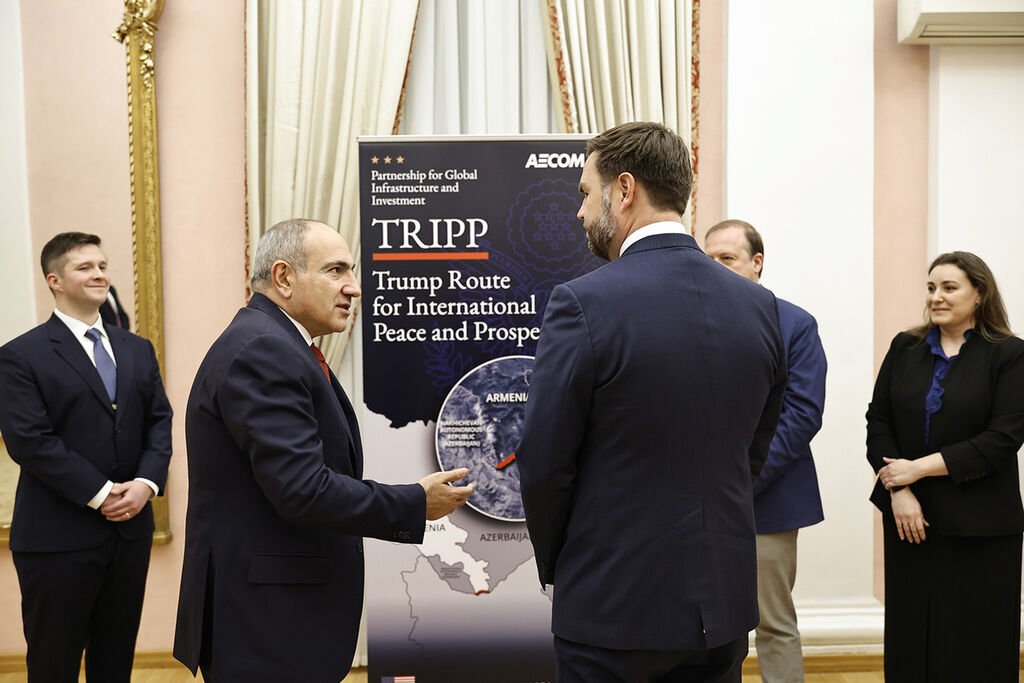 Armenian Prime Minister Nikol Pashinyan and U.S. Vice President J.D. Vance discuss the Trump Route for International Peace and Prosperity during Vance’s visit to Yerevan on February 9, 2026. Photo: Website of The Prime Minister of the Republic of Armenia
Armenia: from Russian to American nuclear technology?
During his visit to Yerevan, Vance oversaw the conclusion of a civil nuclear cooperation agreement with Armenia, enabling the U.S. to license exports of nuclear technology and equipment to help replace the country’s ageing nuclear power plant.
According to Vance, the deal could generate up to $5 billion in initial U.S. exports, with an additional $4 billion in long-term fuel supply and maintenance contracts. While the agreement is unlikely to immediately displace Russian involvement at the plant, it lays the foundation for a future reactor independent of Rosatom and for the gradual diversification of Armenia’s nuclear fuel supply.
The timing and substance of Vance’s visit can be read as a signal of U.S. political support for Armenian Prime Minister Nikol Pashinyan ahead of parliamentary elections in Armenia in June. Washington is not only deepening its strategic cooperation with Armenia but also demonstrating a visible stake in the country’s stability and political trajectory.
Azerbaijan eager to play a bigger role
The following day, in Azerbaijan, Vance signed a strategic partnership agreement, further expanding U.S. engagement in the South Caucasus and signalling that it seeks to balance relations with Armenia and Azerbaijan. The agreement covers cooperation in the fields of security, technology, economy and connectivity. Among other things, the U.S. will assist with de-mining.
Since Azerbaijan’s oil production is declining and gas production is not increasing significantly, expanded connectivity would likely enhance Azerbaijan’s strategic role as an indispensable transit state between Europe and Asia.
That would strengthen Azerbaijan’s strategic autonomy by deepening interdependence with the EU, China, Türkiye, the Central Asian states, and others. Baku would also benefit from greater diplomatic leverage in regional and external negotiations. From this perspective, transport corridors function as a form of ‘soft security guarantees’ – the more critical Azerbaijan becomes to regional trade, the higher the political cost for external actors to ignore its interests.
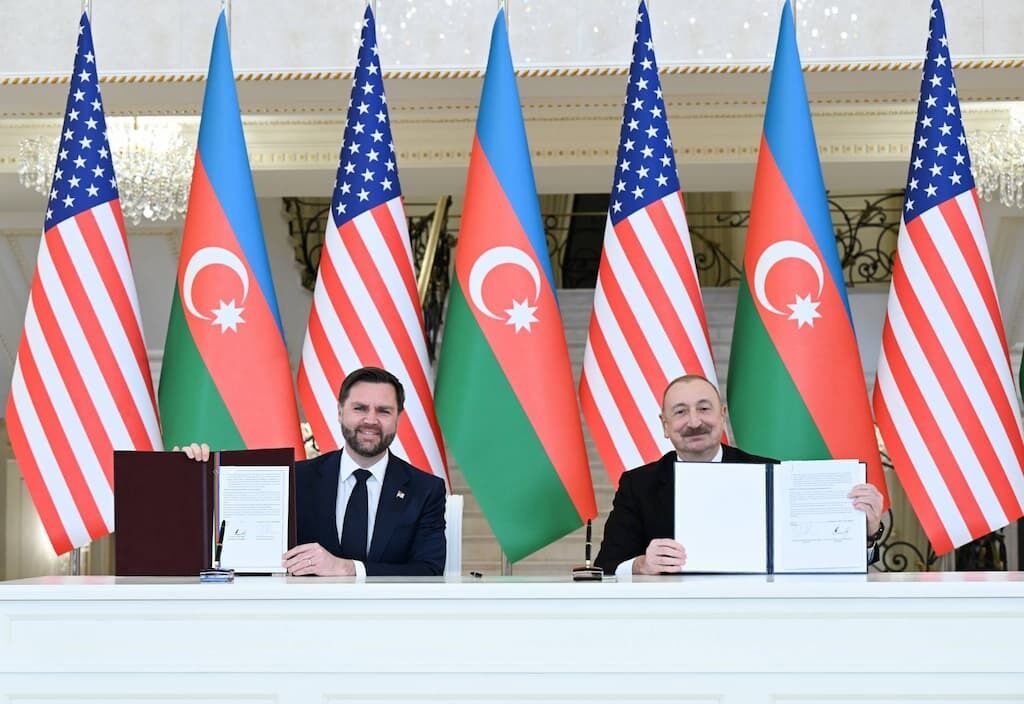 U.S. Vice President J.D. Vance and Azerbaijani President Ilham Aliyev sign a strategic partnership agreement between their countries in Baku on February 10, 2026. Photo: Official website of the President of the Republic of Azerbaijan
More than a battlefield
The broad U.S. interest in the South Caucasus points to a clear paradigm shift in the region. For three decades, external engagement was characterised by conflict management. The ‘Karabakh prism’ defined diplomatic priorities, and virtually every foreign initiative was assessed through the lens of escalation risk and ceasefire stability.
Security considerations overshadowed economic integration, and the region was treated primarily as a potential flashpoint. Today, that framework is being replaced. External actors increasingly approach the South Caucasus as a strategic corridor—focused on transport routes, energy diversification, digital infrastructure, and trade flows—rather than as a battlefield requiring constant crisis management.
U.S. interest in the region carries significant potential to shift relations from zero-sum to positive-sum dynamics. Improved infrastructure and access could substantially reduce the cost and duration of trade routes, benefiting all parties involved—particularly Armenia.
U.S. interest in the region carries significant potential to shift relations from zero-sum to positive-sum dynamics
Re-establishing overland transit would mean reopening the country’s borders with Azerbaijan and marking a decisive step toward ending Armenia’s current state of geopolitical isolation. Although Türkiye–Armenia relations fall outside the scope of the TRIPP, progress on Armenia–Azerbaijan normalisation could, over time and if Ankara and Yerevan see mutual benefit, stimulate additional regional openings.
Iran and Russia losing influence?
The momentum generated by U.S. involvement in the South Caucasus has triggered concern among the regional powers, Russia and Iran. In an interview with TASS, Russian Deputy Foreign Minister Mikhail Galuzin argued that ‘the West is using Armenia as a tool in the geopolitical struggle in its confrontation with Moscow,’ framing Armenia’s recent diplomatic shifts as part of a broader Western containment strategy.
At the same time, relations between Baku and Moscow remain strained. Speaking at the Munich Security Conference, Azerbaijani President Ilham Aliyev accused Russia of having ‘deliberately attacked’ the Azerbaijani embassy and its infrastructure in Ukraine, despite Baku having provided Moscow with the precise coordinates of its diplomatic missions.
The current tensions suggest that Russia’s ability to assert itself in the South Caucasus is increasingly constrained. With its military and economic resources heavily committed to the war in Ukraine, Moscow appears less capable of countering expanding U.S. engagement in the region. Whether this apparent passivity reflects a deliberate strategic retrenchment or signals a deeper and more lasting erosion of Russian influence remains an open question.
For Iran, meanwhile, developments along its northern frontier are a direct matter of national security. Iran sees TRIPP and broader normalisation between Armenia and Azerbaijan not merely as an infrastructure project but as a geopolitical development that could reshape the power balance in the South Caucasus to Iran’s disadvantage, for instance, by weakening its role as a transit state. As a consequence, they might try—through political pressure, economic leverage, or diplomatic manoeuvring—to slow down or complicate these initiatives.
 Azerbaijan’s President Ilham Aliyev, with U.S. Vice President J.D. Vance, stands as an Azerbaijani honour guard marches past, during an official welcome ceremony in Baku. Photo: ANP / EPA / AZERBAIJAN PRESIDENTIAL PRESS SERVICE HANDOUT
Where is the EU?
Vance’s visit shows that the South Caucasus has moved from the periphery to the forefront of U.S. foreign policy. Yet in Brussels, the region is often still treated as peripheral. For the European Union, the current moment presents both an opportunity and a strategic dilemma. As Washington reasserts its diplomatic and economic role, and as Moscow’s and Tehran’s influence potentially diminish, Brussels should decide how to position itself within this evolving regional order.
Vance’s visit shows that the South Caucasus has moved from the periphery to the forefront of U.S. foreign policy
TRIPP matters to the EU for economic and geopolitical reasons. Economically, it offers a chance to diversify Europe’s connections with the South Caucasus, Central Asia, and Asia more broadly. While existing transit routes operate through Georgia and Azerbaijan, strained EU-Georgia relations make it essential for Brussels to open an additional route – this time via Armenia to Azerbaijan.
Geopolitically, the corridor would strengthen the EU’s presence as a credible political actor in the region and support its goal of deepening ties with both Armenia and Azerbaijan. In this regard, clearing landmines is vital to unlocking the region’s economic potential and securing the TRIPP corridor. Some local policymakers argue that if Brussels seeks to position itself as a credible actor in the South Caucasus, it should ensure that the economic dividends of peace are distributed equitably and visibly across the region, including through meaningful financial participation in the rebuilding and development of Karabakh and adjacent infrastructure corridors.
Brussels does not need to compete with Washington’s leadership, but it should avoid policy stagnation. Given the U.S.’s tendency to prioritise short-term results and its uncertain long-term commitment to the region, the EU’s comparative advantage lies in its patience, institutional continuity, and broad policy toolbox.

Vance skips Georgia
J.D. Vance’s February 2026 tour of the South Caucasus bypassed Georgia, widely interpreted as a telling sign of shifting regional dynamics. The Georgian government has sought to maintain its strategic standing with the U.S. administration by underscoring its readiness to reset relations. Prime Minister Irakli Kobakhidze stated that he aims ‘to renew the strategic partnership with the United States from a clean slate, with a well-defined roadmap.’
U.S. involvement in the South Caucasus signals that conflict is no longer the defining dynamic of external engagement. TRIPP and related initiatives could gradually integrate Armenia and Azerbaijan into overlapping networks of trade, energy, and infrastructure. This would raise the political cost of renewed confrontation, while rewarding cooperation with significant economic gains.
Yet this outcome is not predetermined. Russia and Iran are unlikely to passively accept a diminished role, and their capacity to disrupt or delay projects remains real. Much will therefore depend on whether the U.S. and the EU sustain coordinated involvement beyond symbolic diplomacy and commit to long-term investment and institutional presence.
voedselpark amsterdam .. Kom 14 & 15 maart naar Reclaim the Seeds bij de Fruittuin van West | Stem jij op 18 maart voor een groene polder?
|
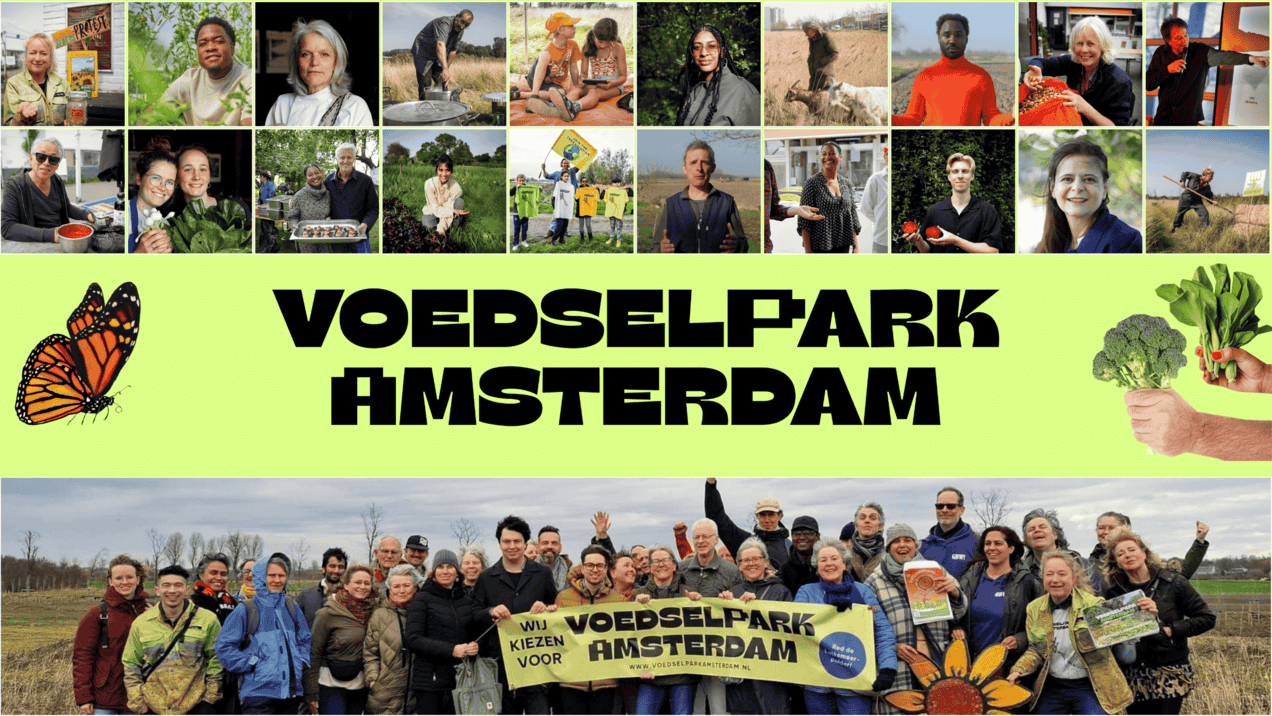

het groeneveld kan wel wat hulp gebruiken … (teken de petitie… en doe meer …)
Het Groene Veld is een vrijplaats, één van de laatste grote rafelranden van Amsterdam. Een plek in de stad waar cultuur en natuur niet worden bedacht en gepland maar vanzelf ontstaan. Zonder vaste structuur en commerciële druk. We willen de gemeente eraan herinneren dat ze heeft aangegeven het beschermen van de rafelranden van de stad belangrijk te vinden.Teken onze petitie waarin wij oproepen om zich aan haar belofte te houden om vrije ruimtes in de stad te beschermen. Deel ons verhaal: download onze ludieke posters om zelf uit te printen, of kom op maandag of vrijdagavond langs om posters en stickers op te halen.
hetgroeneveld.amsterdam


Microsoft lies to its workforce to exploit them into building digital arms to mass kidnap our communities in the US!
Microsoft lies to its workforce to exploit them into building digital arms to mass kidnap our communities in the US!
On February 17th, two exposés published by The Guardian and +972 Magazine revealed that Immigration and Customs Enforcement (ICE) has “more than tripled the amount of data it holds on Microsoft servers between July 2025 and January 2026” and has relied on Microsoft’s Azure Cloud and AI tools to analyze that data. Adding these ICE contracts to the long list of contracts Microsoft has with the Israeli military and government, the company firmly cements its status as one of the key digital arms dealers of the 21st century. From AI and surveillance technologies deployed against Palestinians on occupied Palestinian land to tools used to target civilian and migrant communities in the United States, Microsoft technology powers systems that terrorize, surveil, displace, and murder people across the globe.
Read our full statement at:
noaa.cc/statement/microsoft-lies-ice
Until Liberation,
No Azure for Apartheid
Action Network